No products in the cart.
The Art of Cooking in Clay: Why Traditional Cookware Still Matters
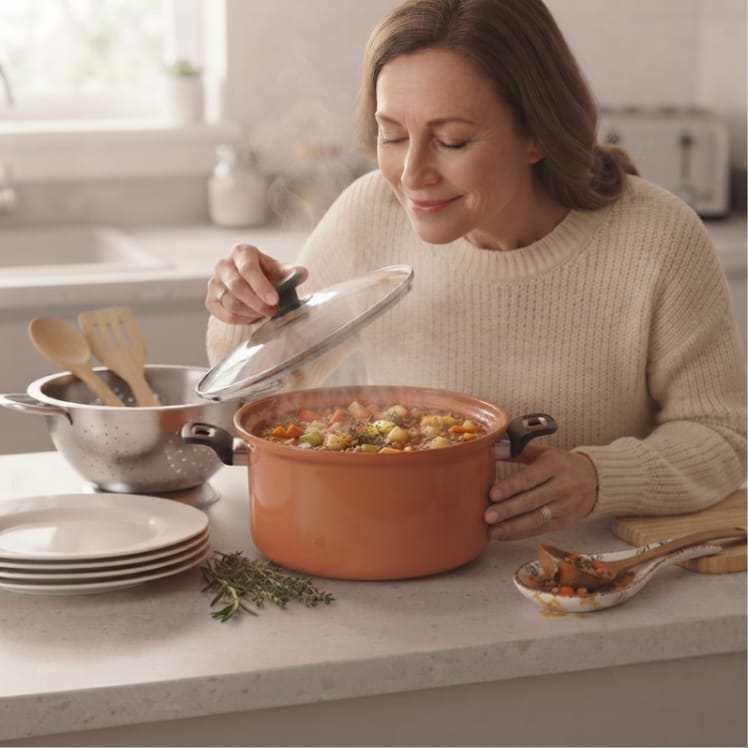
There is something deeply comforting about food cooked in clay. Perhaps it is the gentle aroma that fills the kitchen.
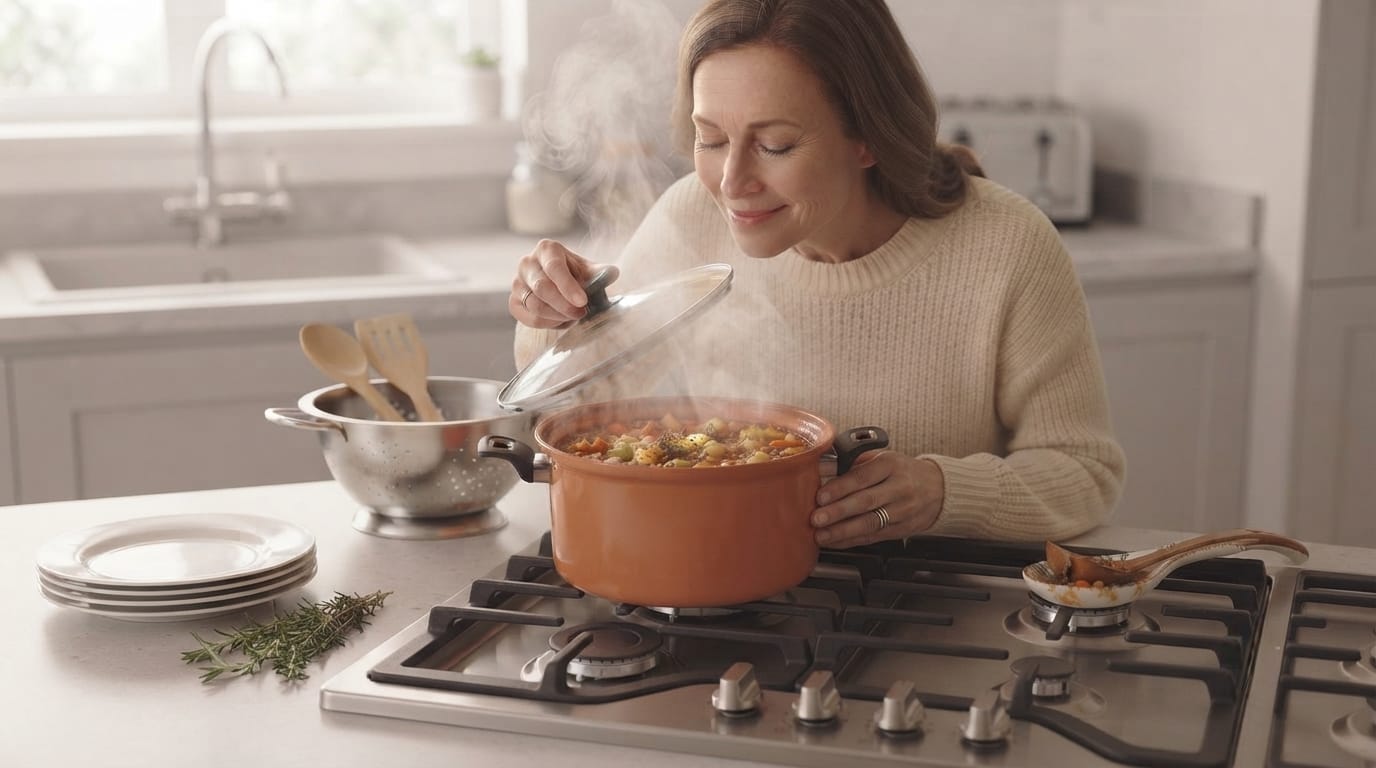
There is a certain kind of warmth that comes with food cooked in clay.
It might be a slow-cooked curry, a simple daal, seasonal vegetables, or even something as ordinary as fried eggs for breakfast. The ingredients may be familiar, and the recipe may not have changed at all, yet the experience can feel noticeably different.
That difference isn’t magic, and it isn’t about making exaggerated promises about health or flavour. It comes down to how clay behaves when it meets heat — slowly, gently and naturally.
For generations, clay cookware has been used to prepare food at an unhurried pace. Today, as modern kitchens become increasingly focused on speed and convenience, returning to clay offers something rather different: the opportunity to let the ingredients cook in their own time. And sometimes, that is exactly what good food needs.
The first thing you notice when cooking with clay is that it asks you to slow down.
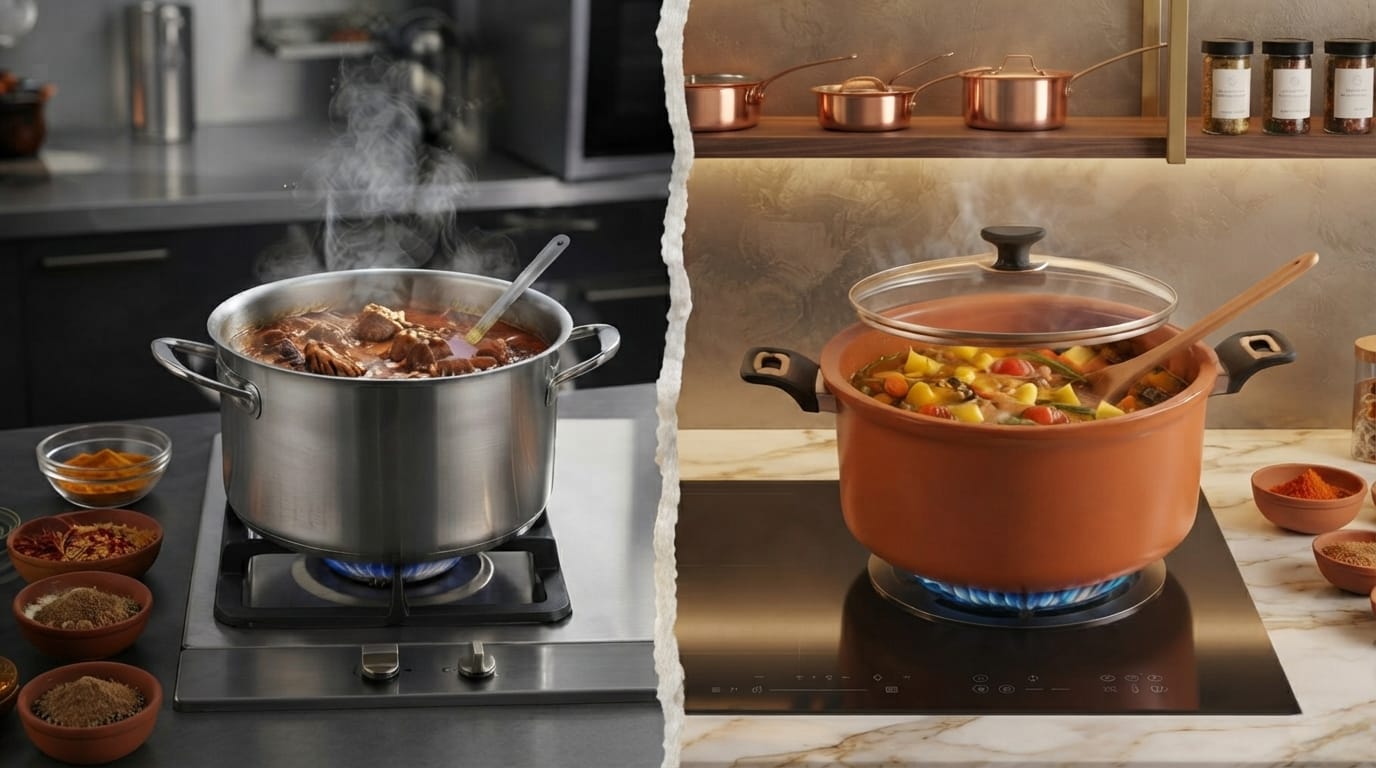
Unlike cookware that heats extremely quickly, clay takes time to warm. That gradual heating makes it particularly suitable for recipes where gentle, steady cooking is more important than speed. Think of a traditional curry.
The onions need time to soften. The tomatoes need time to break down. The spices need time to release their aroma, and the meat needs time to become tender. Clay encourages you to let all of that happen naturally.
Instead of turning the heat up and trying to finish quickly, you allow the cookware to warm gradually and the food to develop at its own pace. That slower rhythm is at the heart of traditional clay cooking.
Clay cookware is known for its ability to gradually absorb and retain heat. This creates a different cooking environment from cookware that heats and cools very rapidly. Once properly heated, a clay vessel can maintain warmth and continue gently cooking the food.
This is particularly useful for dishes that benefit from simmering.
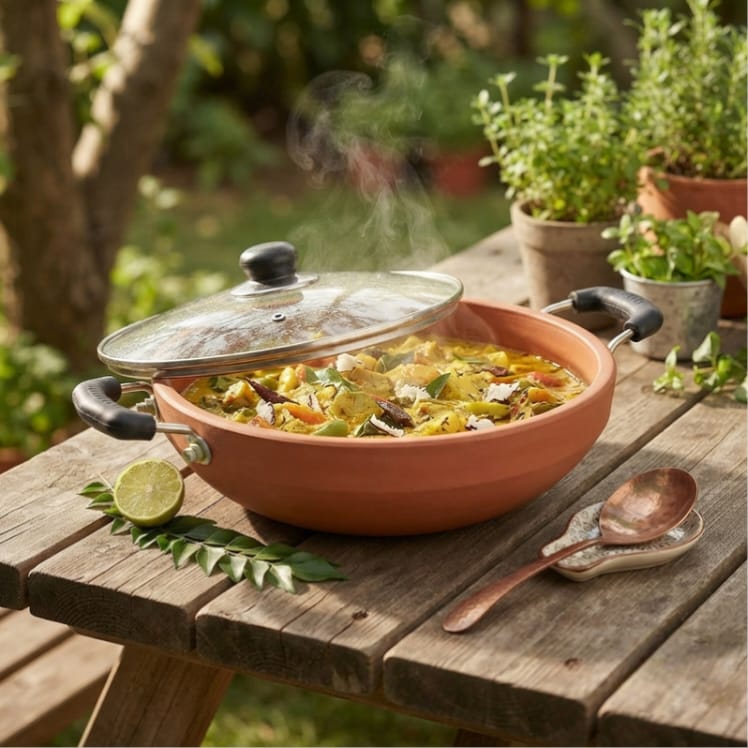
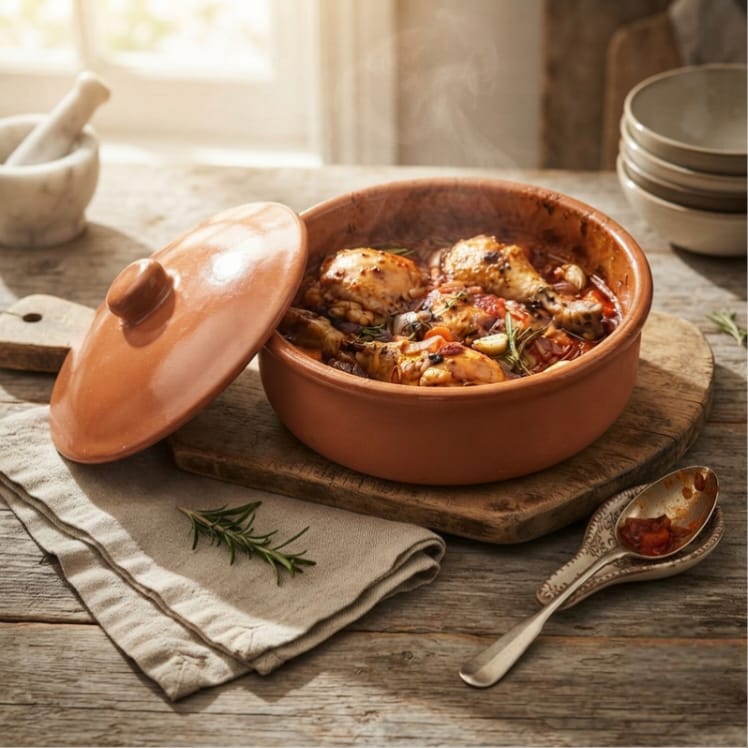
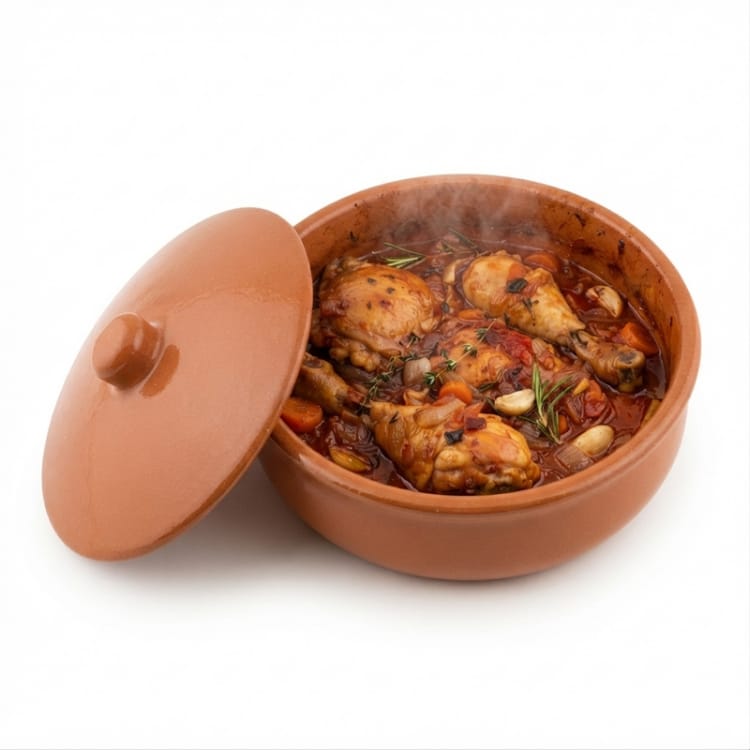
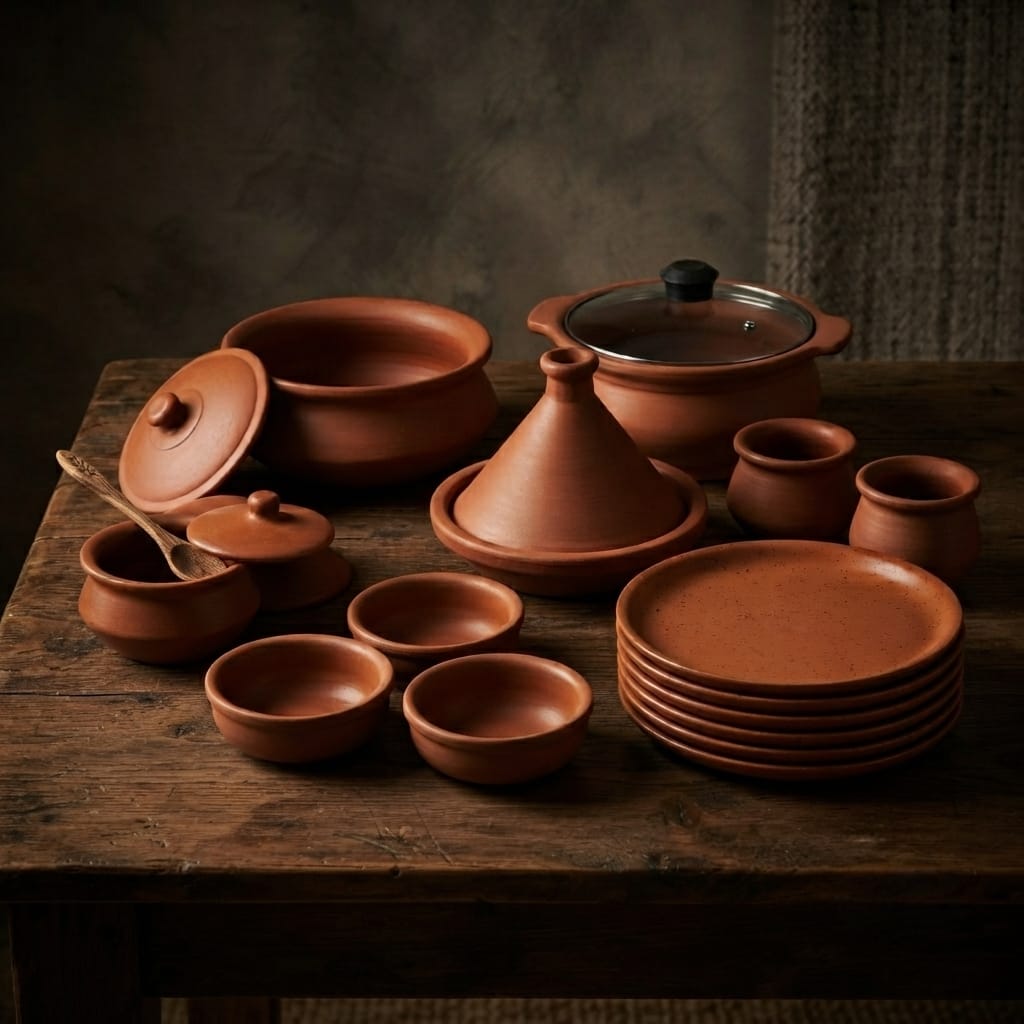
A clay handi can be wonderful for curries, daal, nihari and stews. A clay karahi can bring a traditional character to meat and vegetable dishes.
But slow cooking isn’t only for elaborate recipes.
It can change the way you prepare everyday food, too.
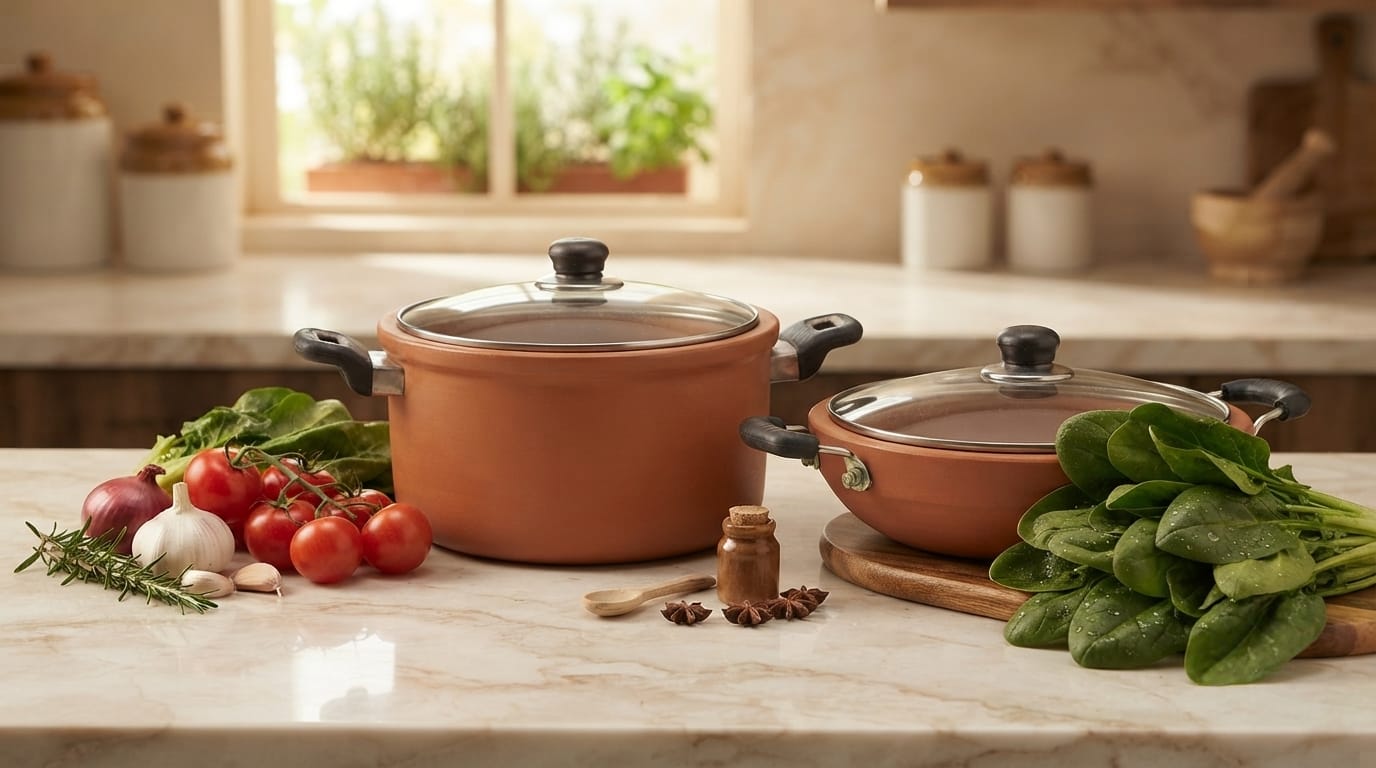
Vegetables are a beautiful example. Something as simple as potatoes, tomatoes, onions, okra or seasonal vegetables can be cooked in clay with a gentler approach.
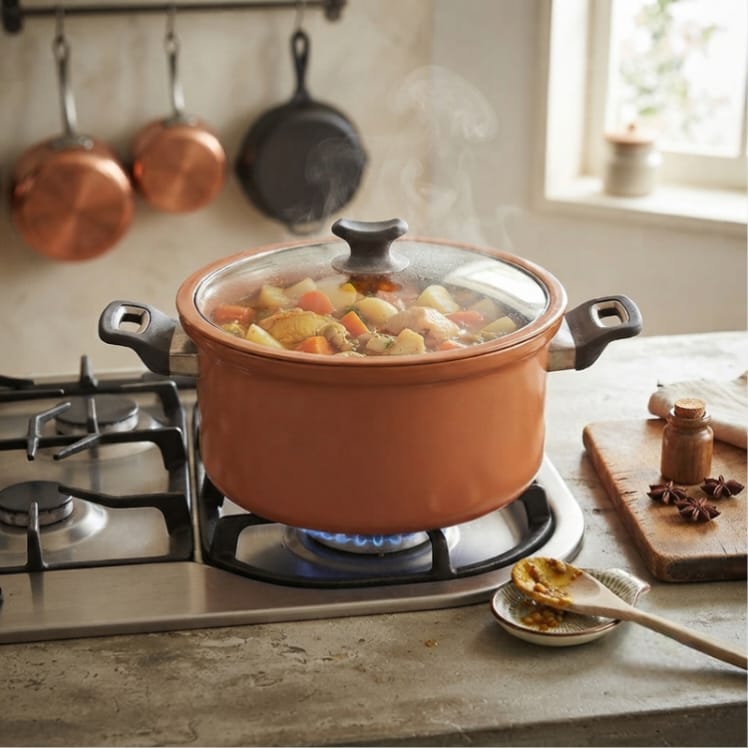
Instead of aggressively cooking them over high heat, you can allow them to soften gradually while their natural flavours develop. A simple aloo tamatar, for example, can become a comforting meal when the potatoes slowly absorb the spices and tomato-based gravy.
Similarly, bhindi, mixed vegetables or roasted seasonal vegetables can benefit from careful, controlled cooking. The result isn’t necessarily a completely different flavour.
It is more subtle than that. The vegetables can feel more integrated into the dish, with the spices and other ingredients having time to come together rather than competing for attention. And perhaps that is what makes traditional food so satisfying. Nothing needs to shout.
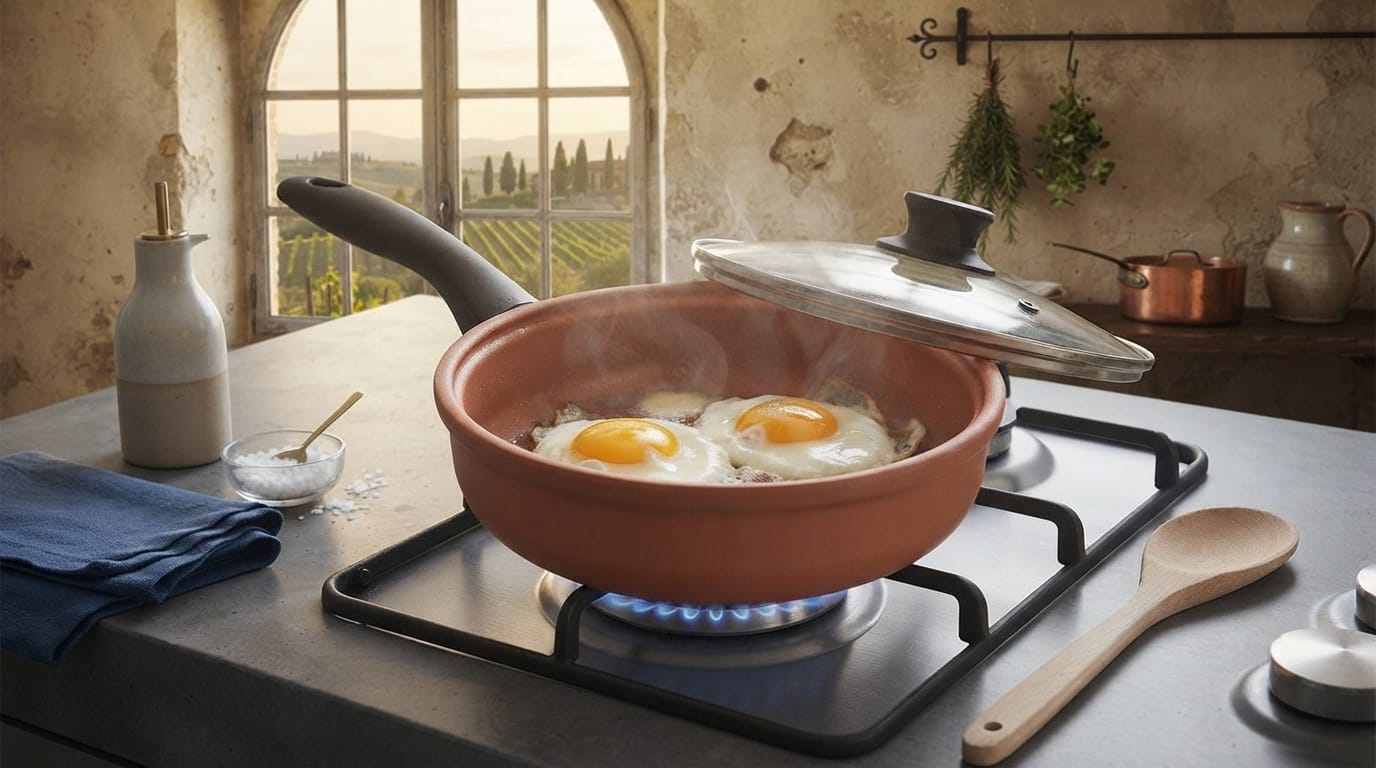
Clay cookware isn’t reserved for complicated Pakistani dishes. Even something as simple as frying an egg can become a different experience.
Imagine heating a suitable clay pan gradually, adding a little oil or butter, and gently frying an egg. The process takes a little more patience than using a conventional pan, but that is precisely the point. The edges can cook gradually while the center remains soft, depending on the heat and cooking method. And when breakfast is this simple, the cookware itself becomes part of the experience.
A warm clay pan, a couple of eggs, fresh roti and a cup of tea. Nothing elaborate. Just good food prepared slowly.However, always follow the specific heat and stovetop instructions provided with your clay cookware. Not every clay piece is designed for every type of heat source.
Moisture is another important part of traditional cooking. Many Pakistani dishes depend on a delicate balance between heat and moisture. Curries, daals and slow-cooked meats need enough moisture to cook gently without becoming dry.
Because clay is naturally porous, and because covered clay cookware can create a moist cooking environment, it is particularly well suited to this style of cooking. This can be especially useful when preparing dishes such as nihari, chicken handi, daal or aloo gosht. When the lid is kept on and the cooking process is gentle, steam and moisture remain an important part of the environment inside the pot. The food is allowed to cook slowly rather than being exposed to intense heat for a short period.
Perhaps this is the biggest difference of all.Time.
Food needs time for flavors to come together. Consider a traditional curry. At the beginning, you can clearly identify the onions, tomatoes, garlic, ginger and spices. As the dish cooks slowly, those individual elements begin to merge. The tomatoes become part of the gravy. The spices become rounder and more integrated.
The meat absorbs the surrounding flavors. The aroma changes. And eventually, the dish becomes something greater than the individual ingredients that went into it. Clay cookware doesn’t replace good ingredients or good cooking. It simply encourages a cooking process where time becomes part of the recipe.
It might seem strange that, with all the advanced cookware available today, people are still interested in something as traditional as a clay pot. But perhaps that is exactly why clay cookware feels special.
Modern life gives us speed. Clay gives us patience. Modern cookware gives us convenience.
Clay gives us connection. And you don’t have to choose one over the other.
A modern kitchen can have stainless steel, non-stick cookware and appliances alongside a handmade clay handi or karahi. You can use modern methods when you’re short on time and choose clay when you want to slow things down. That balance is what makes traditional cookware relevant today.
There is no honest way to say that every dish will automatically taste “better” simply because it was cooked in clay.
Taste is personal.
The recipe matters.
The ingredients matter.
The cook matters.
And the cooking technique matters.
But clay cookware can create a different environment for cooking — one built around gradual heating, gentle cooking and moisture. And those qualities are particularly well suited to many traditional Pakistani dishes. Perhaps that is why a simple daal cooked slowly in a clay pot can feel so comforting. Why vegetables can taste so at home in an earthen vessel.
Why a humble egg fried in a clay pan can turn an ordinary breakfast into something a little more memorable. It isn’t about making food complicated. It is about giving it time.
At Al-Farooq Pottery, we believe clay cookware belongs in today’s kitchens not because we need to recreate the past exactly, but because there are parts of traditional cooking that are still worth experiencing.
The warmth of handmade pottery. The patience of slow cooking. The aroma of food developing gradually.
The beauty of serving directly from the vessel in which it was cooked. From a rich mutton curry to seasonal vegetables, from a comforting daal to a simple fried egg, clay allows you to experience everyday cooking in a slightly different way. And perhaps that is the real beauty of it.
Clay doesn’t ask you to cook more complicated food. It simply asks you to slow down and let simple food become something special.
Al-Farooq Pottery — bringing the timeless art of cooking in clay into the modern kitchen.
There is something deeply comforting about food cooked in clay. Perhaps it is the gentle aroma that fills the kitchen.
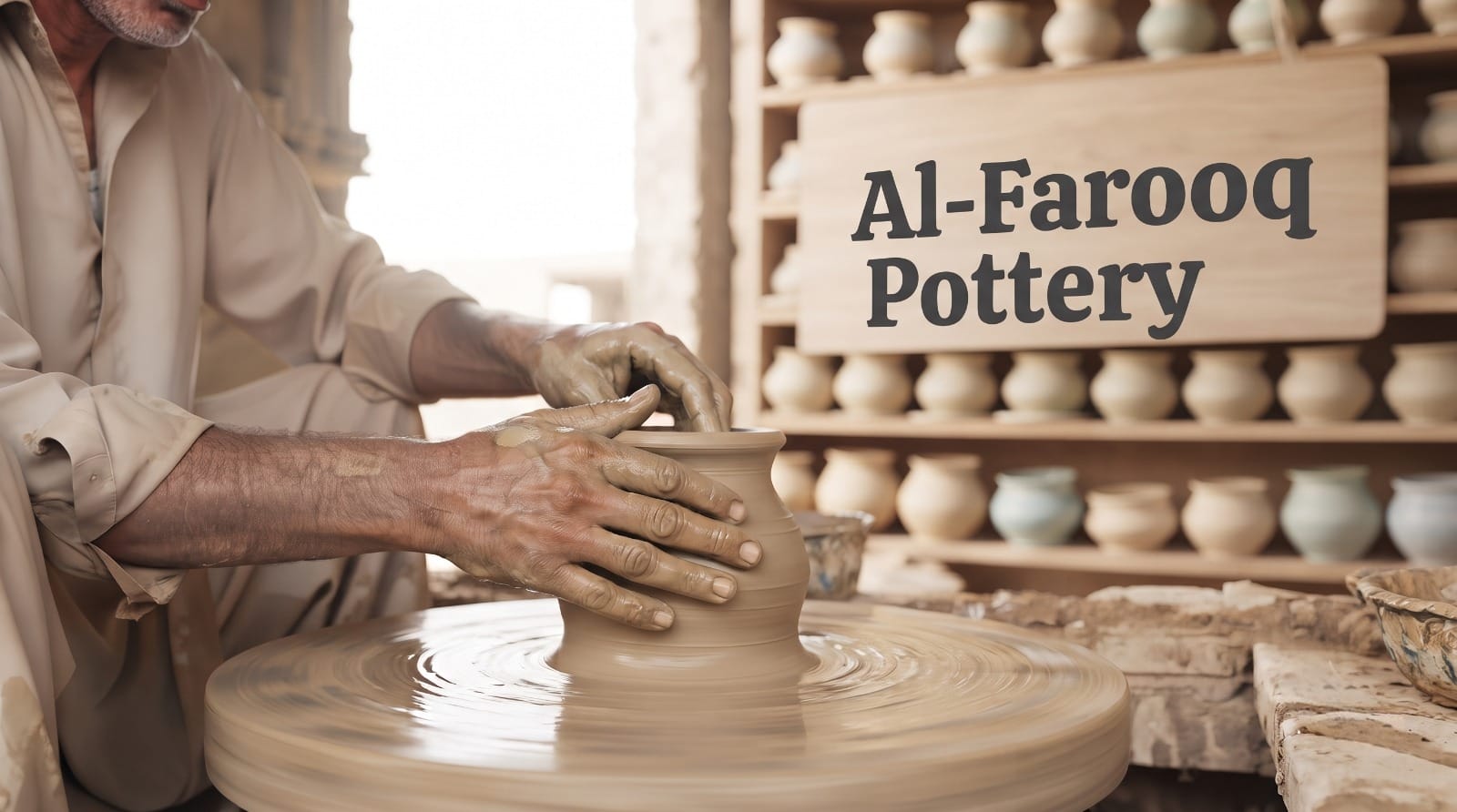
There is something special about cooking in clay. It is not simply about placing a handi on the stove or