No products in the cart.

The Art of Cooking in Clay: Why Traditional Cookware Still Matters
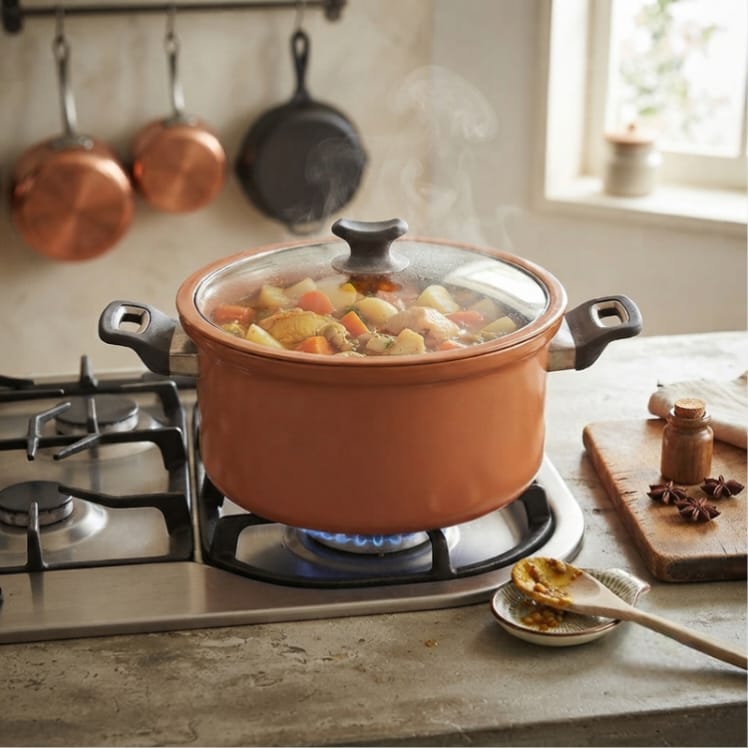
There is something deeply comforting about food cooked in clay. Perhaps it is the gentle aroma that fills the kitchen.
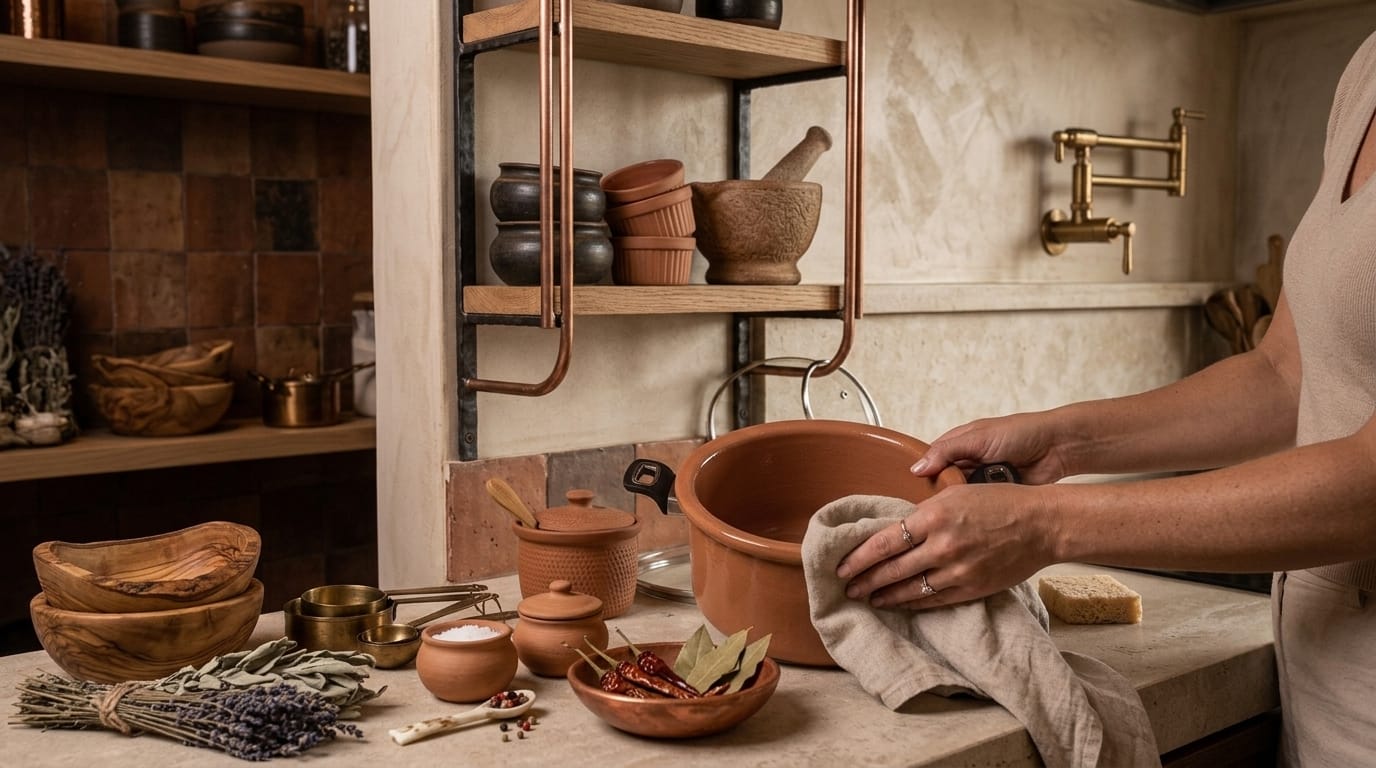
There is something special about owning a piece of handmade clay cookware.
Unlike mass-produced pots and pans, clay cookware has a natural character of its own. It carries the warmth of traditional craftsmanship and brings a slower, more thoughtful approach to cooking into the modern kitchen. But clay is different from stainless steel or non-stick cookware. It needs a little more care, especially when you are using it for the first time.
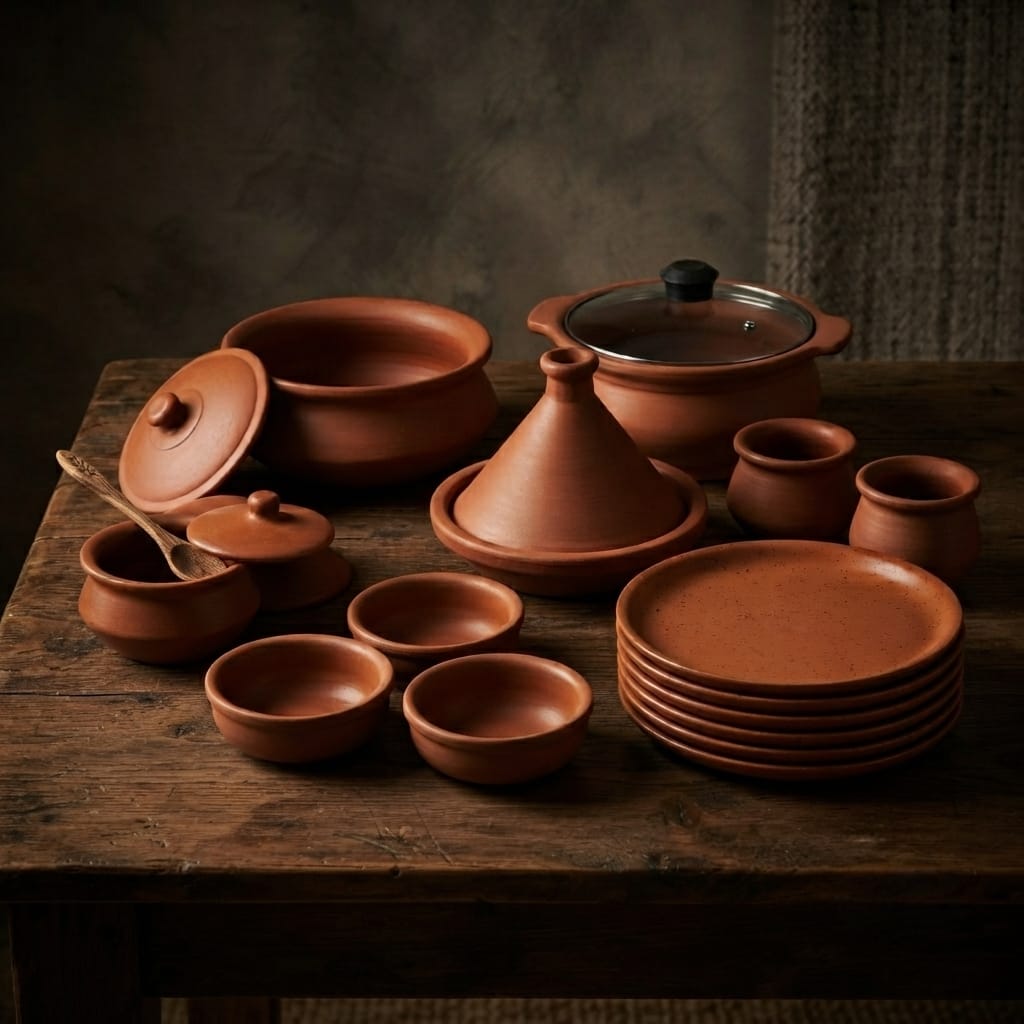
The good news? Caring for clay cookware is simple once you understand how the material behaves. Whether you have an Al-Farooq clay handi, karahi, saucepan, or another earthen cookware piece, a few simple habits can help you enjoy it for a long time.
The first use is one of the most important stages in caring for a clay pot.
Freshly made clay cookware needs to be introduced to cooking gradually. Unlike metal cookware, clay can be sensitive to sudden changes in temperature, so rushing the process is something you want to avoid.
Before using your new clay cookware, gently rinse it according to the care instructions provided with your piece and allow it to dry completely.
Some traditional clay cookware may also benefit from a preparation or seasoning process before its first use. If your particular Al-Farooq Pottery product comes with specific first-use instructions, always follow those instructions first, as different clay pieces can have different requirements.
The most important rule is simple:
The first use is one of the most important stages in caring for your clay cookware. Unlike metal or non-stick cookware, traditional clay pots need a little preparation before they become part of your everyday kitchen routine.
Before using your new unglazed clay cookware for the first time, soak it completely in clean water for around 8–12 hours, preferably overnight. Make sure the entire piece is immersed in water.
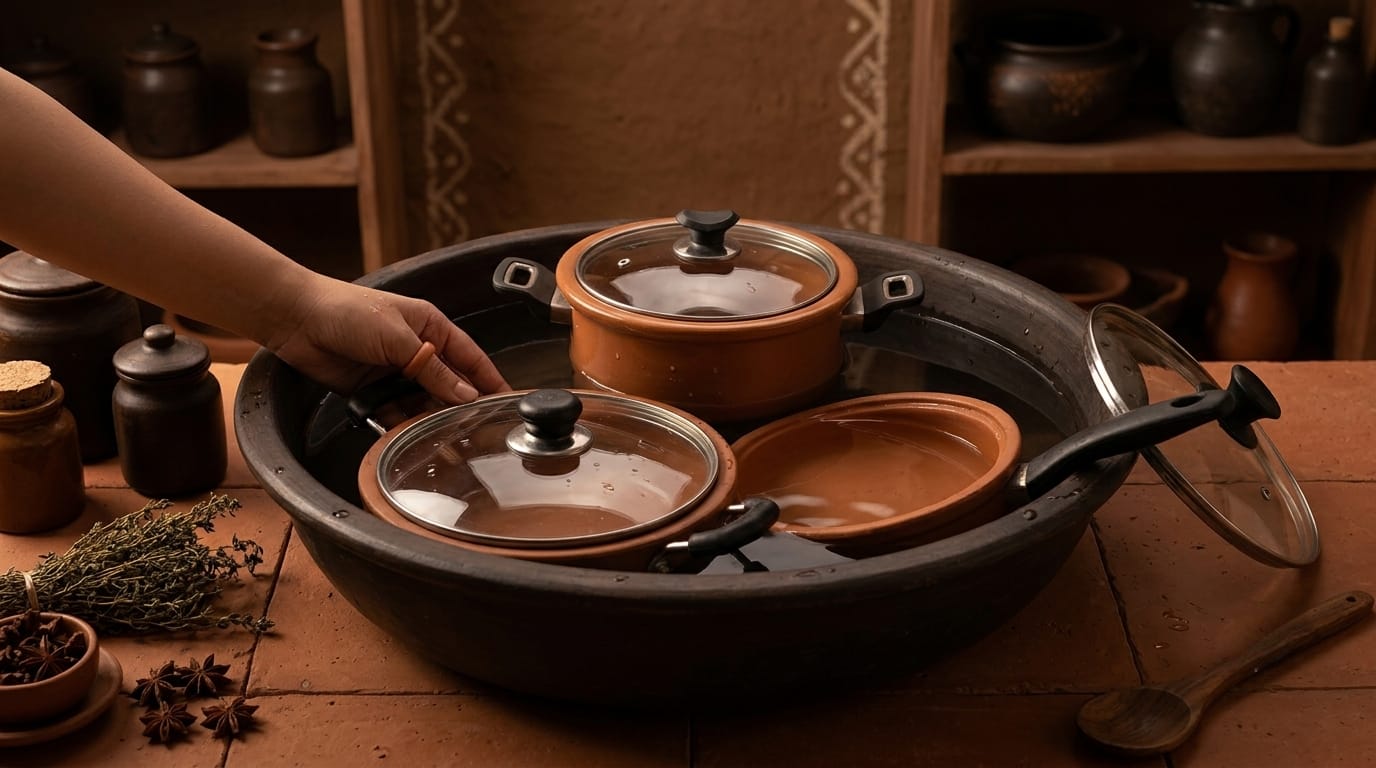
This initial soaking allows the porous clay to absorb moisture before it is exposed to heat. After soaking, gently rinse the cookware and allow it to dry naturally according to the care instructions provided with your particular piece.
Once prepared, your clay cookware should always be introduced to heat gradually. Never place a completely cold clay pot over intense heat immediately, as sudden temperature changes can put unnecessary stress on the clay.
Think of the first use as introducing your cookware to its new environment rather than putting it through a test.A little patience at the beginning can make a big difference.
A simple first-use routine:
Soak → Rinse → Dry → Heat Gradually → Cook
Do not expose a cold clay pot to intense heat suddenly.
Think of the first use as introducing your cookware to its new environment rather than putting it through a test.A little patience at the beginning can make a big difference.
After cooking, allow your clay cookware to cool naturally before washing it. This is especially important because placing a hot clay pot directly under cold running water can create a sudden temperature change. That sudden change can put stress on the clay and may lead to cracking.
Once the cookware has cooled, wash it gently with warm water and a soft sponge or cloth. For everyday cleaning, you generally do not need aggressive scrubbing. Clay is naturally porous, and harsh cleaning products can be unnecessary.
If food has become stuck to the surface, let the cookware soak in warm water for a while. Giving the residue time to loosen is usually much better than attacking it with a rough scrubber.
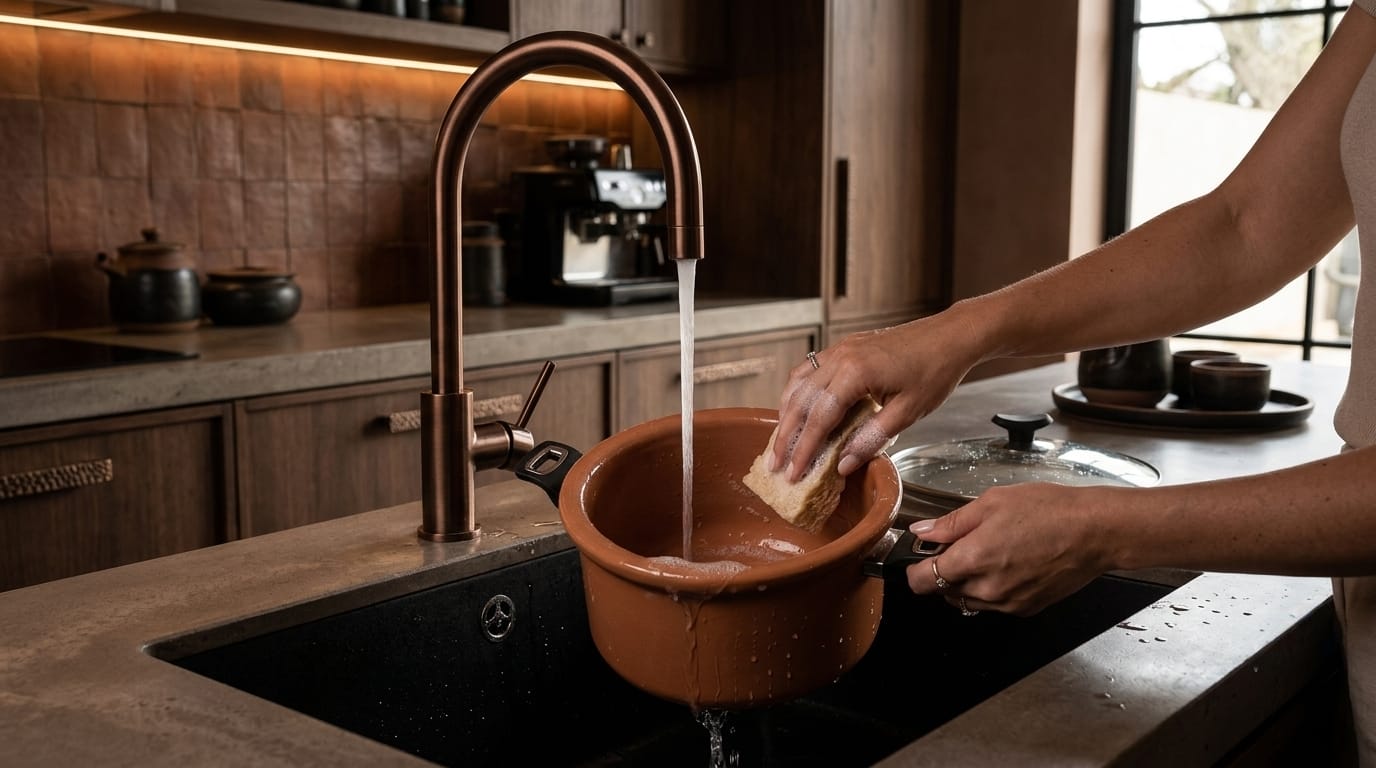
The goal is simple:
Clean gently. Let the cookware do the hard work of loosening the food. Avoid treating handmade clay cookware like a stainless-steel pan that needs vigorous scrubbing after every meal.
Drying is one of those small steps that is easy to overlook, but it matters.
After washing your clay cookware, allow it to dry completely and naturally before storing it.
Place it somewhere clean and well ventilated where air can circulate around it. Avoid putting it away while it is still damp.
Why?
Because clay is naturally porous. Any remaining moisture needs time to evaporate.
If you regularly store clay cookware while it is damp, unpleasant odours or moisture-related problems can develop over time.
So after every wash:
Wash → rinse → air dry completely → store.
It only takes a little extra patience, but it is one of the easiest ways to keep your clay cookware fresh.
Once your clay cookware is completely dry, store it somewhere clean, dry and safe from accidental knocks. Clay cookware is strong when handled appropriately, but it can still be more fragile than metal cookware. Avoid stacking heavy objects on top of it or placing it somewhere where it can easily fall.
If you are stacking multiple clay pieces, place them carefully and avoid putting excessive weight on smaller or more delicate pieces.
Good storage is not complicated.Give your cookware enough space, keep it dry, and handle it with care. And remember: handmade pottery does not need to look perfectly identical to remain beautiful. Small variations in texture and colour are part of the character of handmade clay.
If there is one thing to remember when caring for clay cookware, it is this:
Clay cookware responds differently to heat than metal cookware. A sudden transition from very cold to very hot, or from very hot to very cold, can place stress on the material.
For example, avoid taking a cold clay pot directly from the refrigerator and placing it over high heat.
Likewise, do not take a very hot clay pot and immediately place it under cold water.
Instead, allow temperature changes to happen gradually.
When cooking, begin with appropriate, controlled heat rather than immediately exposing the cookware to extremely high temperatures. When you’re finished cooking, allow the cookware to cool naturally before washing or moving it.
This simple habit can help reduce unnecessary stress on your clay cookware.
Slow and steady is the best approach when cooking with clay. And perhaps that is fitting. Clay cooking has always been about taking your time.
When cleaning handmade clay cookware, simpler is usually better.
Avoid aggressive chemical cleaners, harsh scouring powders and abrasive scrubbers unless the manufacturer specifically recommends them.
You also do not need to treat every mark as a problem. Clay cookware naturally develops character through use. Slight changes in colour or appearance can occur as the cookware becomes part of your kitchen routine.
What matters is keeping it clean, dry and properly cared for.
Also avoid using your clay cookware in ways that are not recommended for that particular product. Always check the care and cooking instructions supplied with your Al-Farooq Pottery piece, particularly regarding stovetops, ovens, temperatures and other heat sources. Different clay cookware is made differently, so product-specific instructions should always take priority over general advice.
Because clay is naturally porous, it can sometimes retain traces of the foods cooked in it. This is part of the nature of earthen cookware.
A rich curry, for example, may leave a subtle colour or aroma behind. That does not necessarily mean the cookware is dirty or damaged. Regular gentle cleaning and thorough drying are usually the best approach. Instead of trying to make a handmade clay pot look exactly like it did on its first day, think of its changing appearance as part of its journey. Every meal leaves a little story behind.
Like other ceramic and earthenware products, clay cookware can crack if it is exposed to conditions it is not designed to handle. The most common things to be careful about are:
- Sudden temperature changes
- Excessive or inappropriate heat
- Dropping or hitting the cookware
- Pouring very cold liquid into very hot cookware
- Washing hot cookware immediately with cold water
- Improper storage or handling
This does not mean you need to be nervous about using clay cookware.
Quite the opposite. Once you understand how to handle it, caring for clay cookware becomes part of the experience. Treat it gently, heat it gradually, let it cool naturally and give it time to dry. That’s it.
One of the beautiful things about handmade cookware is that it becomes more personal with use. Your clay handi may become the one you reach for when making a family curry. Your clay karahi may become part of weekend dinners. Your clay saucepan may quietly become part of your everyday cooking routine.
Over time, these pieces become more than kitchen utensils. They become part of the meals, conversations and memories created around your table. That is what makes handmade clay cookware different. It is not designed simply to be used and replaced. It is designed to become part of your kitchen.
Allow the cookware to cool completely, then wash it gently with warm water and a soft sponge or cloth. Avoid harsh chemicals and abrasive cleaning materials unless specifically recommended by the manufacturer. Always allow the cookware to dry completely before storing it.
Follow the care instructions provided with your particular clay cookware. Because clay is naturally porous, some traditional clay cookware is best cleaned with warm water and gentle methods rather than strong detergents.
The most important step is to avoid thermal shock. Do not expose cold clay cookware to sudden intense heat or place hot cookware under cold water. Heat and cool the cookware gradually and handle it carefully.
Allow the cookware to air dry completely before putting it away. The exact drying time depends on the piece, humidity and ventilation, so the safest approach is to make sure there is no remaining moisture before storage.
Many clay cookware pieces can become part of regular cooking routines when they are used and cared for according to their specific instructions. Always check the manufacturer’s recommendations for your particular piece.
Because clay is a natural and porous material, its appearance can change subtly with cooking and use. Variations in colour and texture are part of the natural character of handmade.
There is something deeply comforting about food cooked in clay. Perhaps it is the gentle aroma that fills the kitchen.
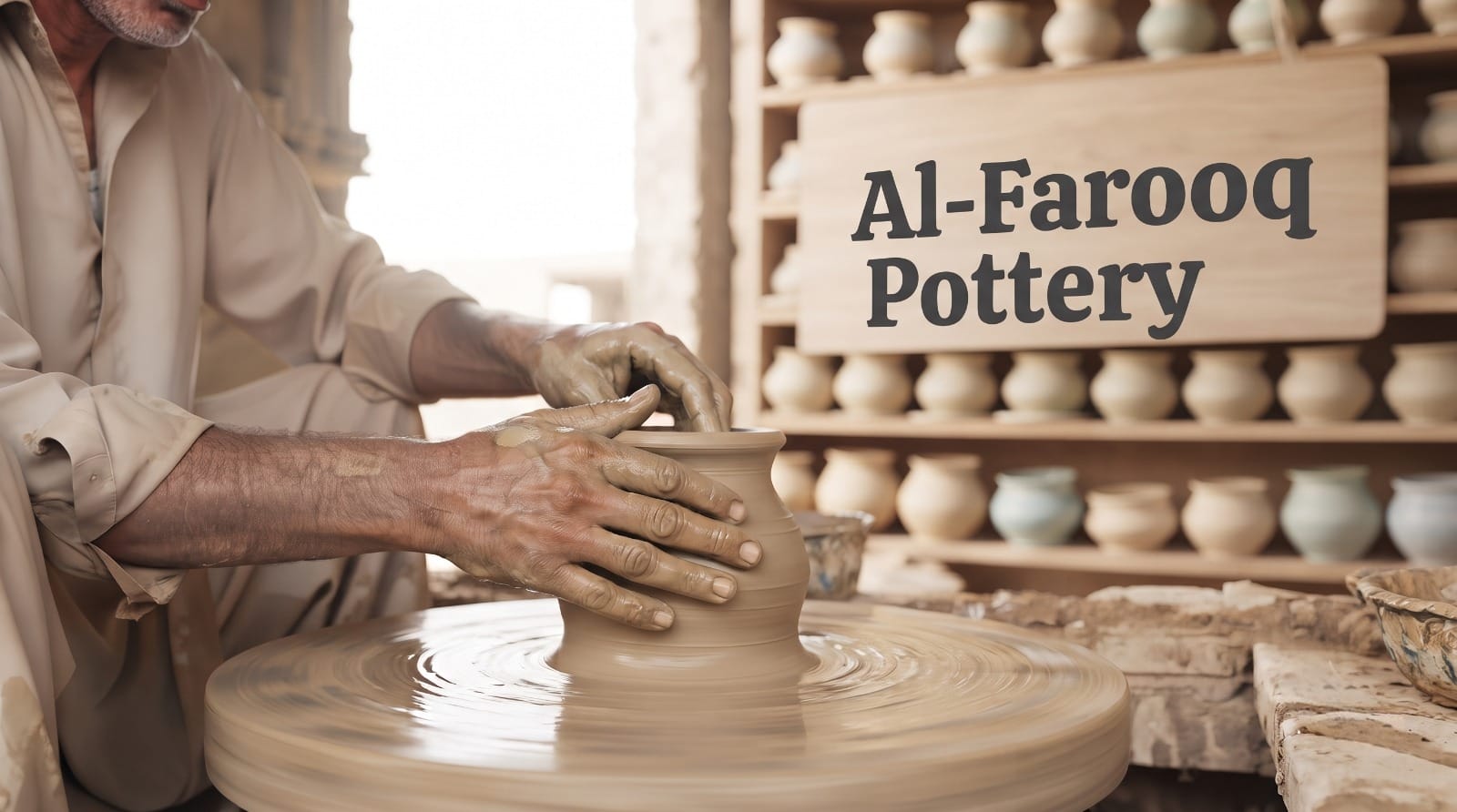
There is something special about cooking in clay. It is not simply about placing a handi on the stove or